
when the body dissolves
and all that remains is the light
The performances in the series titled Doină were created as spaces of time to consider the fragility and ruptures of the world. They took place in small towns situated far from urban centres, in both Lithuania and Iceland. While the struggles, histories and stories of each place are different, they all echo the same songs, those that no one alive today sings anymore.
Doină I
EN:
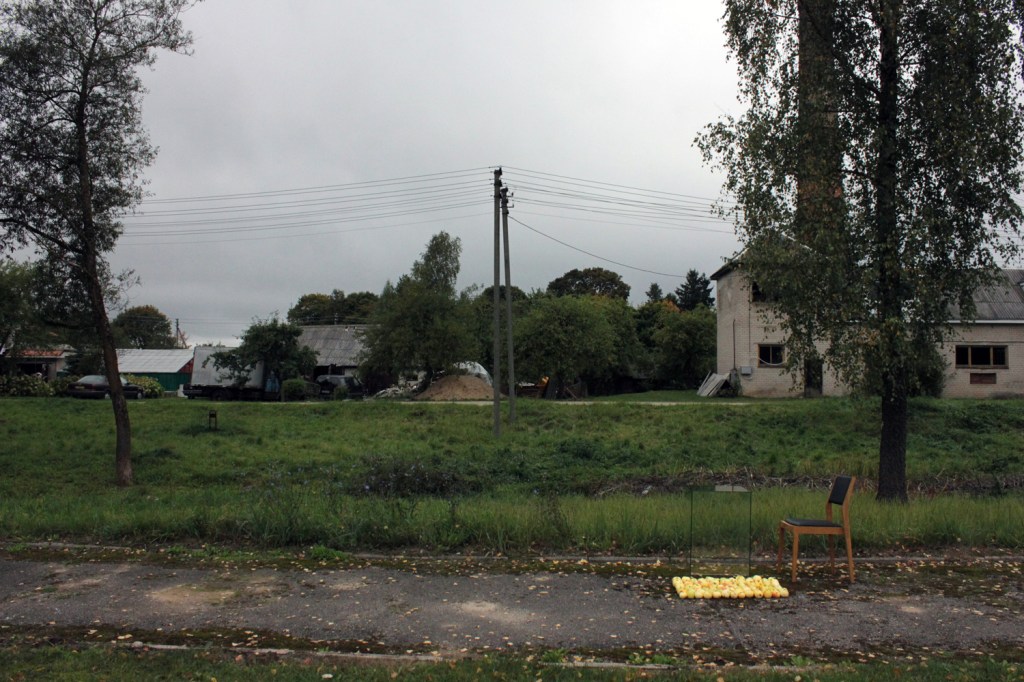
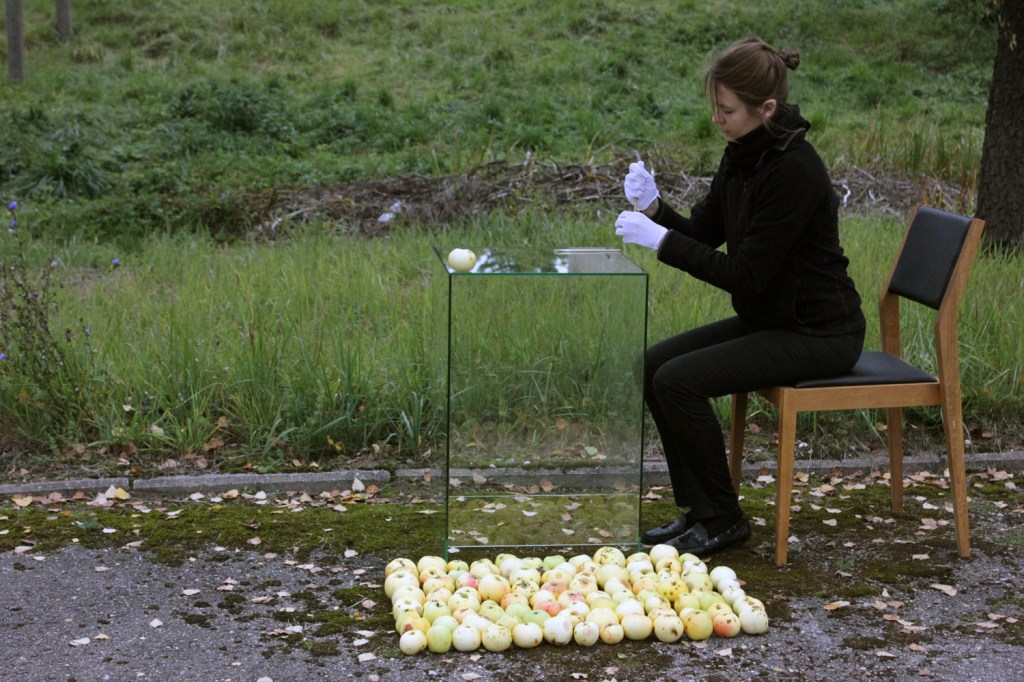
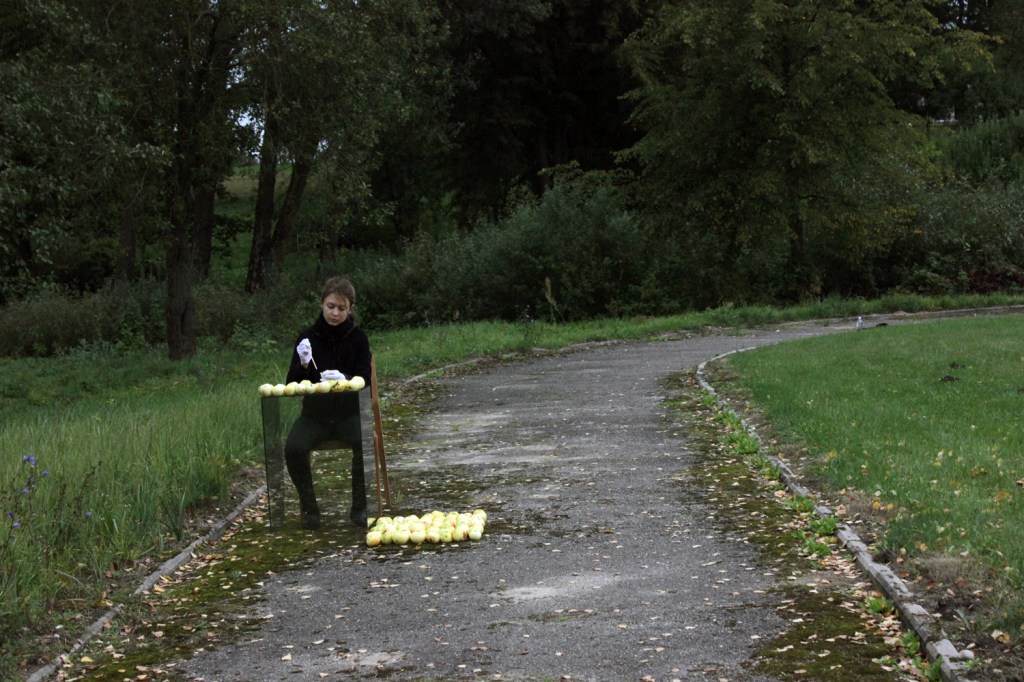
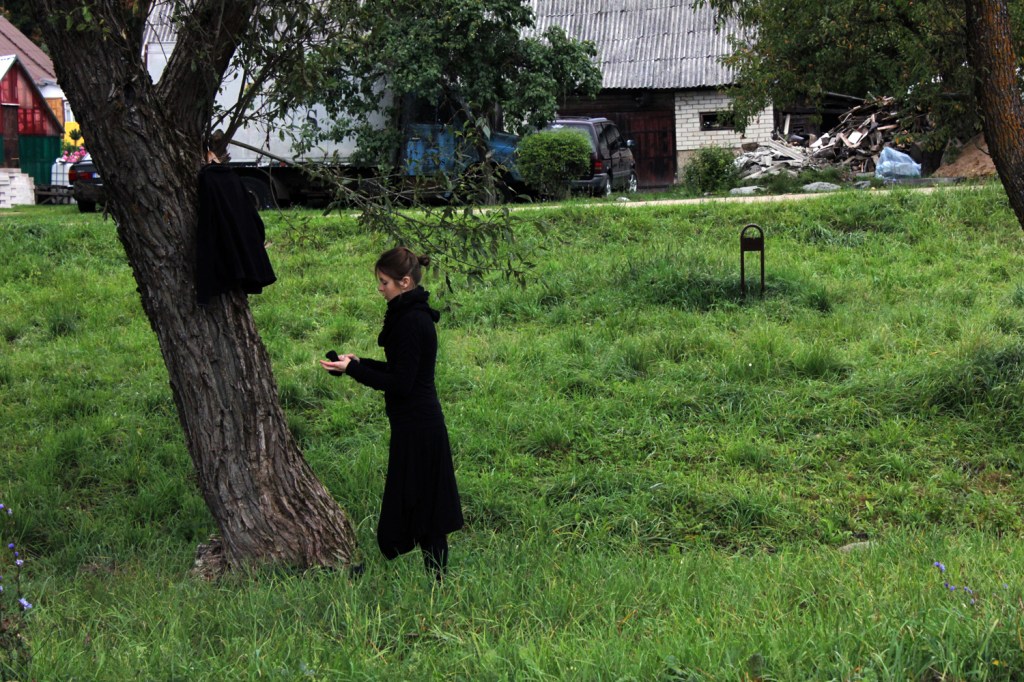
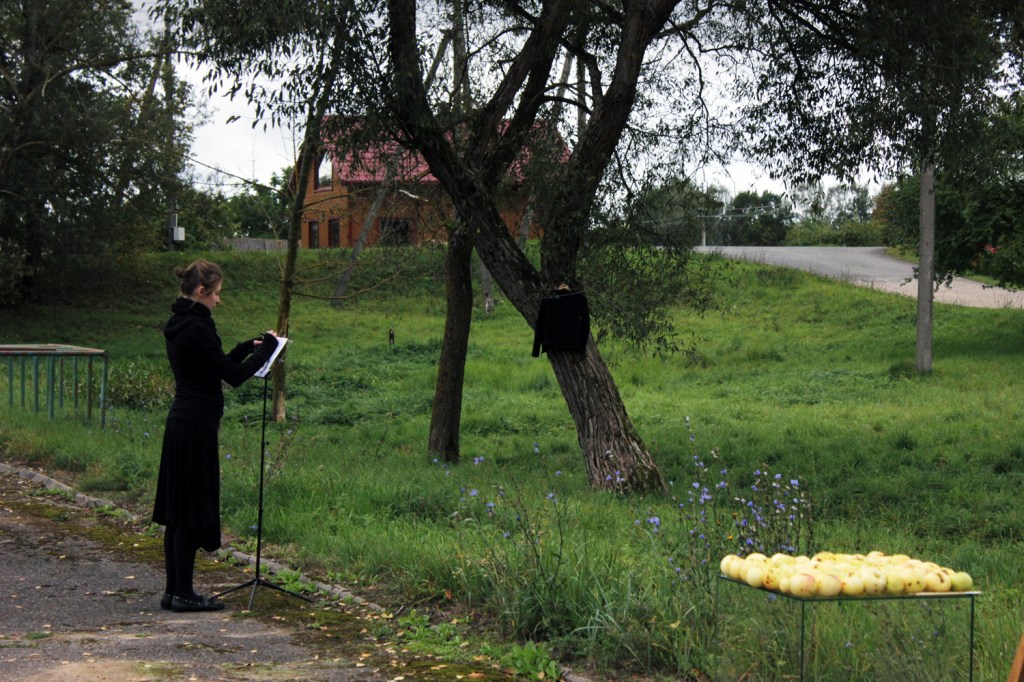
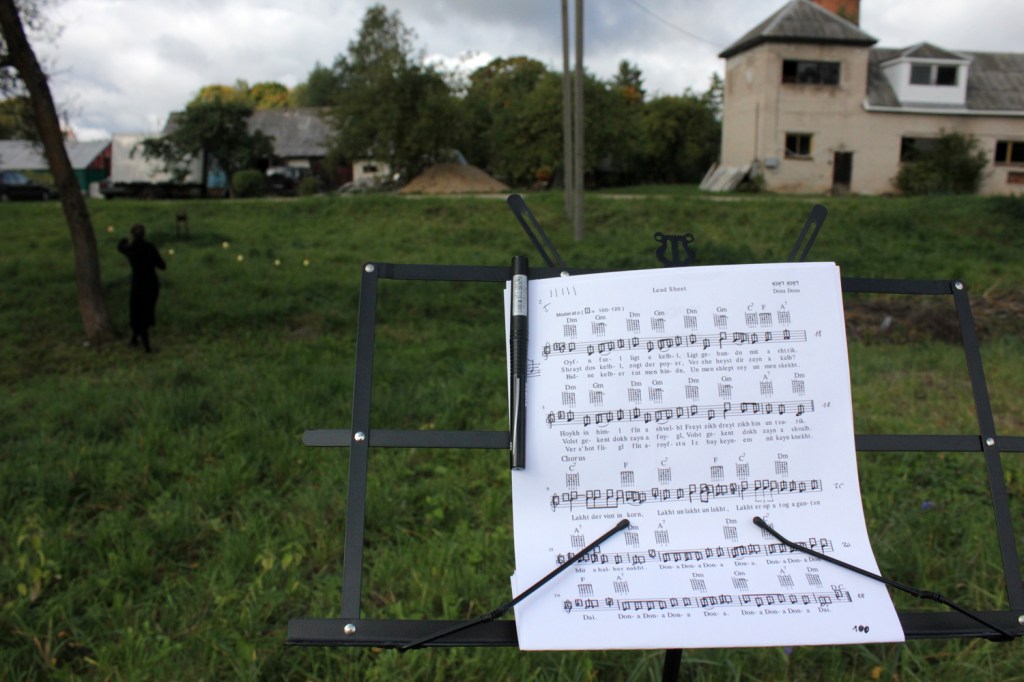
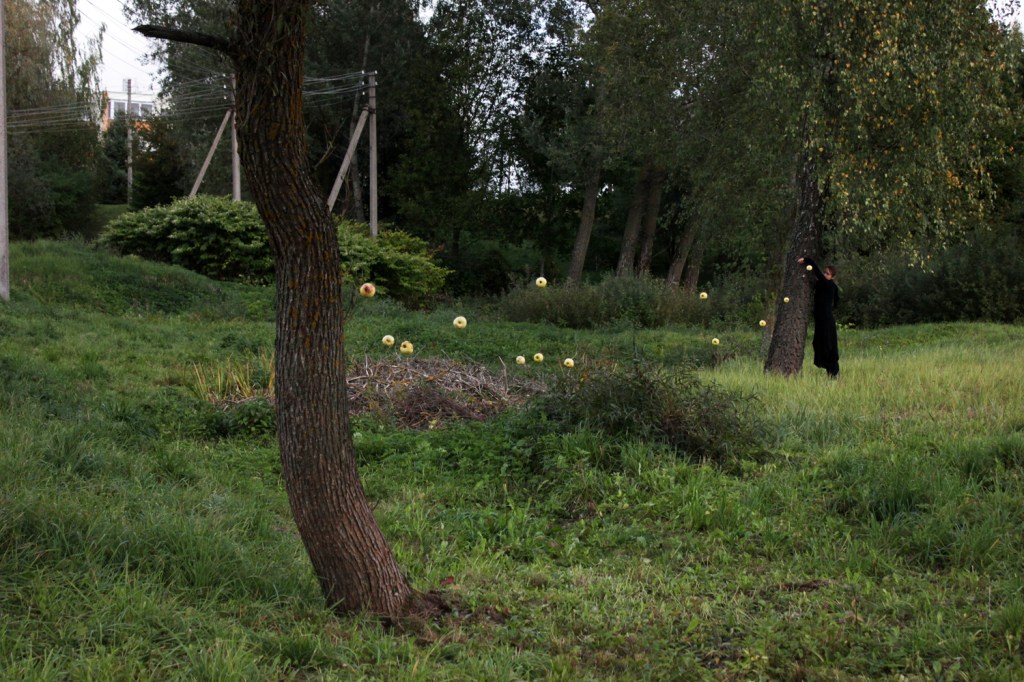
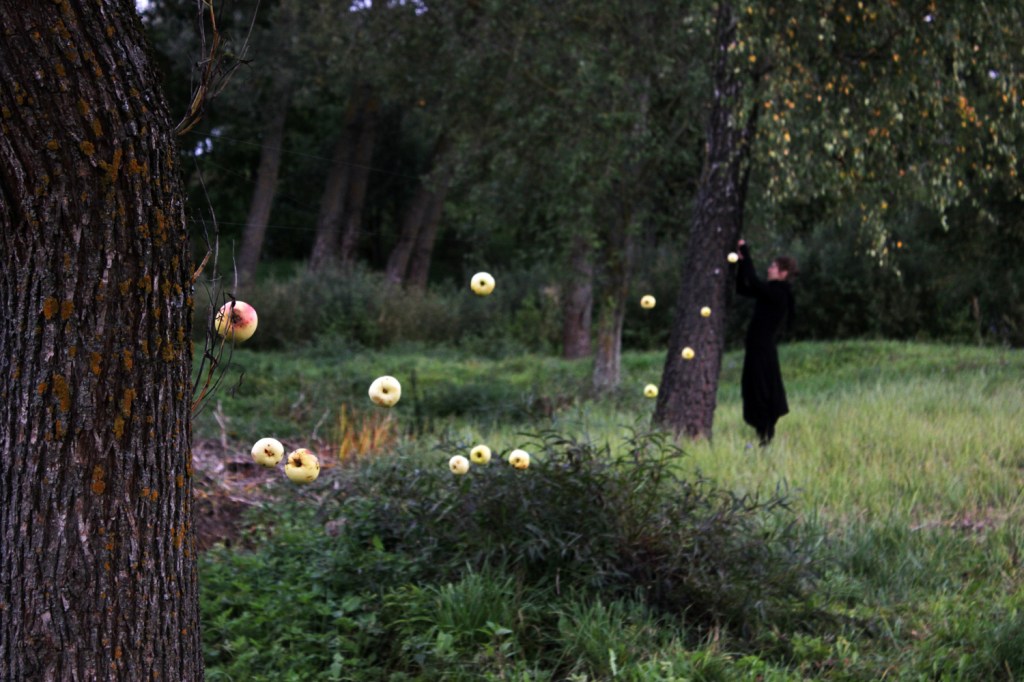
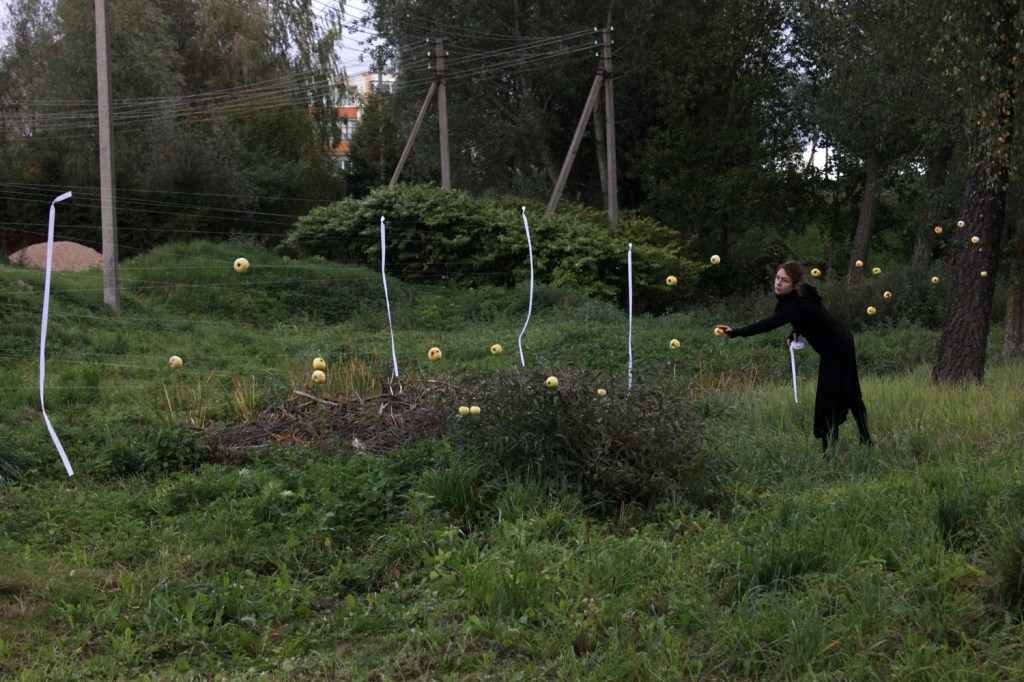
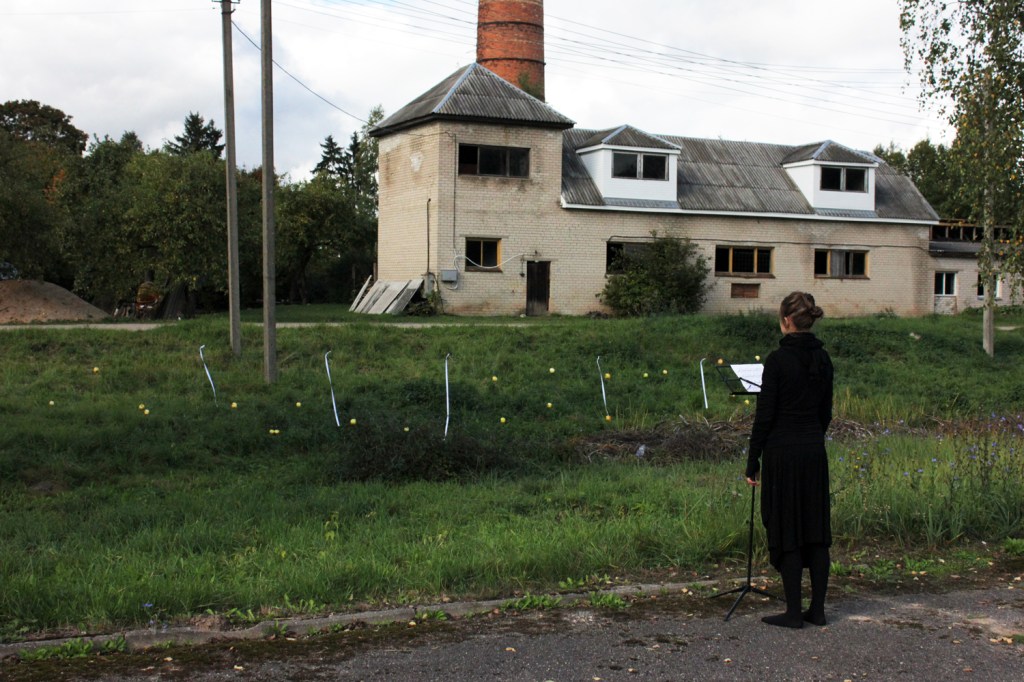
This doină (see video), performed live on the 28th of September in a small town of Leliunai / LT, was a doină about my being bound to a tradition, questioning what runs through my veins, the shimmering light, the scent of fallen apples, waning warmth of the Earth, fragility of the wind, the sky growing quiet, the travel of watery clouds.
I use this doină to reinterpret and resurrect the work song, a traditional form of a song that is dying away. The sort of a song that one hears while stretching the line, while breaking the thread, when the wood meets the glass.
This is a doină about memory: memory of my childhood, and even-moreso – memory of my present. Letters unwritten, farewells unspoken, dialogues broken, calls unanswered, all this golden yearning.
Fingers that rest in the palm of my hand, covered in thin skin, nearly see-through. Silky hair in the fierce winds of the start of September. The smell of fertile soil, nuzzled by giant mechanic beetles. Dark chocolate colored earth softly turning under the maw of the plow.
This is a doină about the fragility of time and about the cracking timespace. It is about the moments when all of time & spaces cluster in such a tight pack, that they (inevitably) disintegrate, thus opening new cracks, big enough for a finger, wide enough for a palm, oftentimes dangerously deep enough to fit a hand up to the shoulder, in any case – perfect to reach out and touch all those recent “just nows” and simple pasts.
* Doină was first discovered and investigated by Béla Bartók in 1912 in Northern Transylvania. After he found similar genres in Ukraine, Albania, Algeria and India, he concluded that the form has Arabo-Persian origin.
The principles of doină are identified in klezmer – a musical tradition of the Ashkenazi Jews of Eastern Europe.
“Doina may be vocal or instrumental, and are performed by men and women, solo or with accompaniment. Their texts relate to the themes of love, nature, longing, sorrow and grief. <…> The musical form is freely improvised, but the textual meter is octosyllabic.” (“The Concise Garland Encyclopedia of World Music”, p.605)
“Doină” was developed and performed while in residency at Utena Art Center/Lithuania, in the context of “Questioning Arts” a-i-r program.
LT:
Kalbėti apie ryšį su tradicija, su tuo, kas arčiausiai manęs, kas mano gyslomis teka, kalbėti per saulės virpėjimą, obuolių kvapą, gęstančią žemės šilumą, per trapų vėją, per tylantį dangų, per vaikštančius vandeningus debesis – to siekiau šia doină, rugsėjo 28 dieną atlikta Leliūnų miestelyje.
Ši doină tarsi savaip perinterpretuoja ir atgaivina jau nebedainuojamas darbo dainas. Ji skamba per tempiamą valą, per trūkstantį siūlą, per medį sutinkantį stiklą.
Tai doină apie atmintį: labai daug apie mano vaikystę, dar daugiau apie mano dabar. Neparašyti laiškai, neišsakyti atsisveikinimai, nutrūkę dialogai, neatsiliepti skambučiai, giedras auksinis ilgesys. Plona perregima oda aptraukti pirštai, besiilsintys mano delne. Šilko plaukai rugsėjo pradžios besismarkaujančiame vėjyje. Tręšiamų žemės kvapas mechaninių vabalų milžinų išraustuose laukuose. Šokolado juodumo dirvos gabalai minkštai virstantys lauk iš po arklo nasrų.
Tai doină apie laiko trapumą ir eižinčias erdvėlaiko plotmes. Apie akimirkas, kai visų laikų erdvės susispaudžia taip smarkiai, kad nuo įtampos trūksta ir skyla, ir per skaudančius plyšius vėl įtelpa pirštai, delnai, kartais kyla pavojus susmigt lig peties, ir pavyksta priliesti praėjusius “ką tik”.
*Béla Bartókas doinas išgirdo pirmiausiai šiaurinėje Transilvanijos dalyje 1912m. Atradęs panašaus žanro kūrinių Ukrainoje, Albanijoje, Alžyre ir Indijoje, jis nusprendė, kad doinos formos šaknys stiebiasi iš arabų-persų kultūros.
Doinos principai identifikuojami ir Klezmer (קלעזמער) muzikoje, kurios ištakos randamos Rytų Europos žydų (aškenazi) diasporoje.
“Doinos gali būti vokalinės arba instrumentinės, atliekamos vyrų ir moterų, solo arba akompanuojant instrumentui. Jų tekstai yra apie meilę, gamtą, ilgesį, liūdesį ir sielvartą. <…> Muzikinė forma yra improvizuota, tačiau tekstai paprastai komponuojami oktosilabiniu metru.” (versta iš “The Concise Garland Encyclopedia of World Music”, I tomas, p.605)
“Doină” sukurta ir atlikta reziduojant Utenos meno centre, pagal meno rezidencijų programą “Klausinėjantys menai”.
Doină II
Doină II is the second in the series of three performances about the tradition and its place in our lives. For this performance I first cultivated some seedlings to bring from Lithuania to Iceland in a wine glass. In Þingeyri, the morning of the performance, I asked the local fishermen to sell me a fish they would have caught that day. They kindly agreed (but ended up donating it as a gift). During the performance, a lump of icy snow became a table for a ritualistic transplantation.
I cut the fish, and painted my face with its blood. I took out the guts and placed them into a tall glass with some burning liquid in it. Then I took out the soil with the seedlings out of the glass I had brought from Lithuania, and filled the fish with it. I was trying to start the fire, but the cold and wind had numbed my fingers, therefore it was audience members that finally got it going. I filled the empty glass with icy snow, and tried to thaw it in order to water the soil within the fish. The snow was melting slowly due to low temperatured, and unexpectedly the glass containing the guts of the fish cracked.
The fish was neatly cleaned afterwards, cooked in the oven. It fed 12 people that evening.
Performance took place in the small port of Þingeyri in Westfjords region, Iceland, in February 2016.
Doină III
Doină III took place in Ignalina (LT) in March 2016. The performance consisted of me slowly pushing a pile of earth with a sapling of a rose in it. The performance lasted for over 1,5 h, leaving a trace behind. At the end of the exhibition, the rose was planted in front of the venue.
 Daina Dieva