
The extinction of one species of beings – plants, animals, insects – if noticed at all, remains in research reports, footnotes, brief and forgettable bits of news, and lines of statistics. But what does extinction really mean? Environmental philosopher Thom van Dooren writes that the extinction of one species means that the whole world that existed as the world of those creatures disappears with it. Being part of the world means being connected to a network of diverse multispecies relationships, being part of an ecosystem, part of each other’s lives, and being part of each other’s songs. Each tangle of relationships is a whole world belonging to many other worlds. It is the togetherness of these worlds that makes this planet livable. The loss of any of the species, of any of the worlds, is an ontological rupture.
This exhibition began as part of an ongoing artistic research project focused on landscapes scarred and unrecognizably altered by extractive practices. Through performative and ethnographic practices, listening, sound and image creation, and writing, I have sought and continue to seek to understand what remains after brutal forces sever the relationships between different beings, relationships formed and maintained over centuries or millennia, across entire epochs. Rift, loss, and an unusual silence – such where no call will be uttered awaiting response – hangs in extracted landscapes. The same is true of landscapes of war.
The lament of the fish falls silent when the river is dammed; when the dam is blown up; when a species goes extinct; when a new name is added to the Red List of Threatened Species. Through the metaphor of the lament of the fish, I speak of mourning and grief, crumbling connections, songs that can no longer be remembered, a language that can no longer be learned. I am speaking about those whose languages we do not understand, or whom we thought speechless, disappearing into further silence. At the same time, I am thinking about the need to remain connected, taking part in each other’s worlds, and want to make space for that.
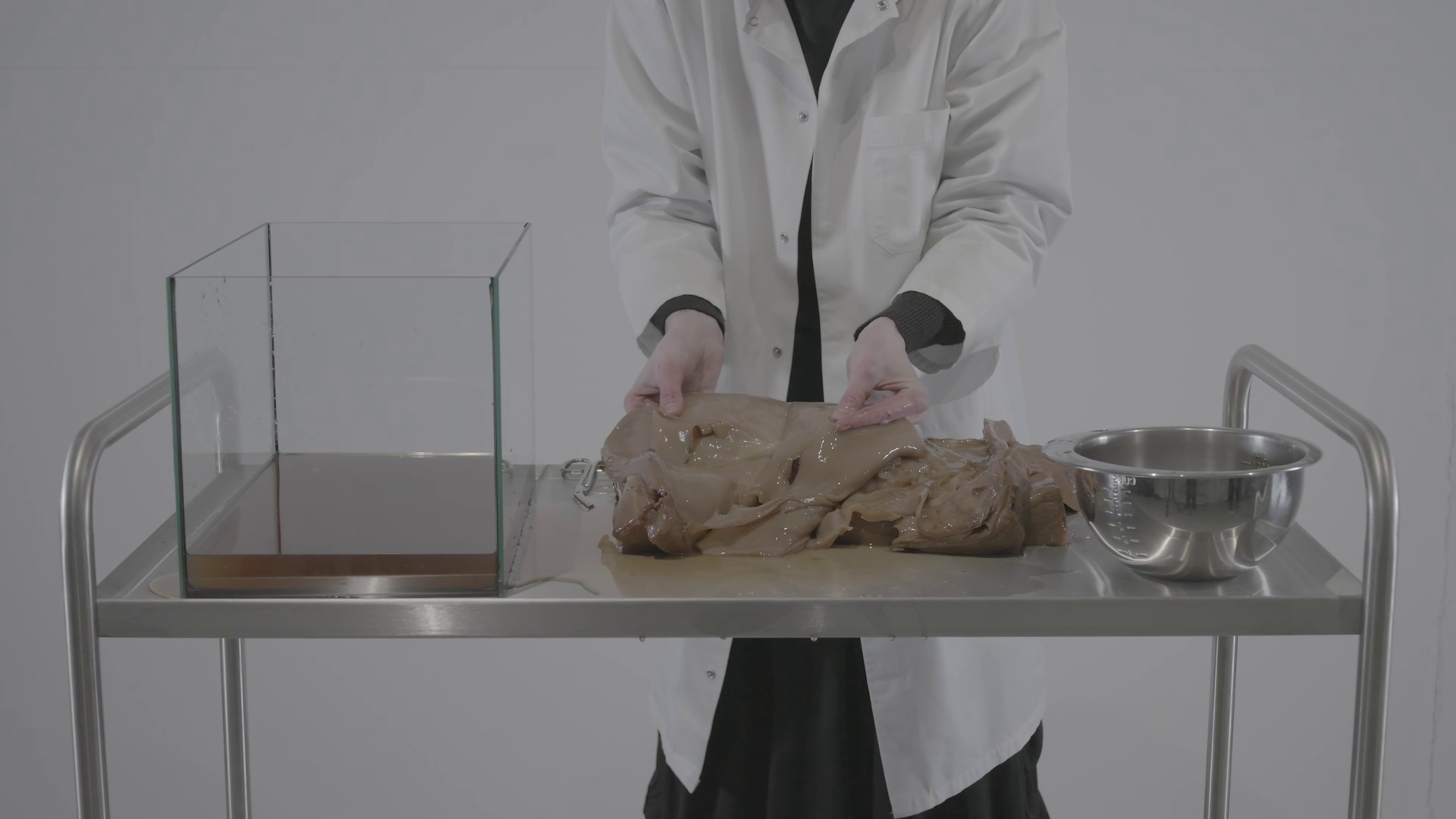
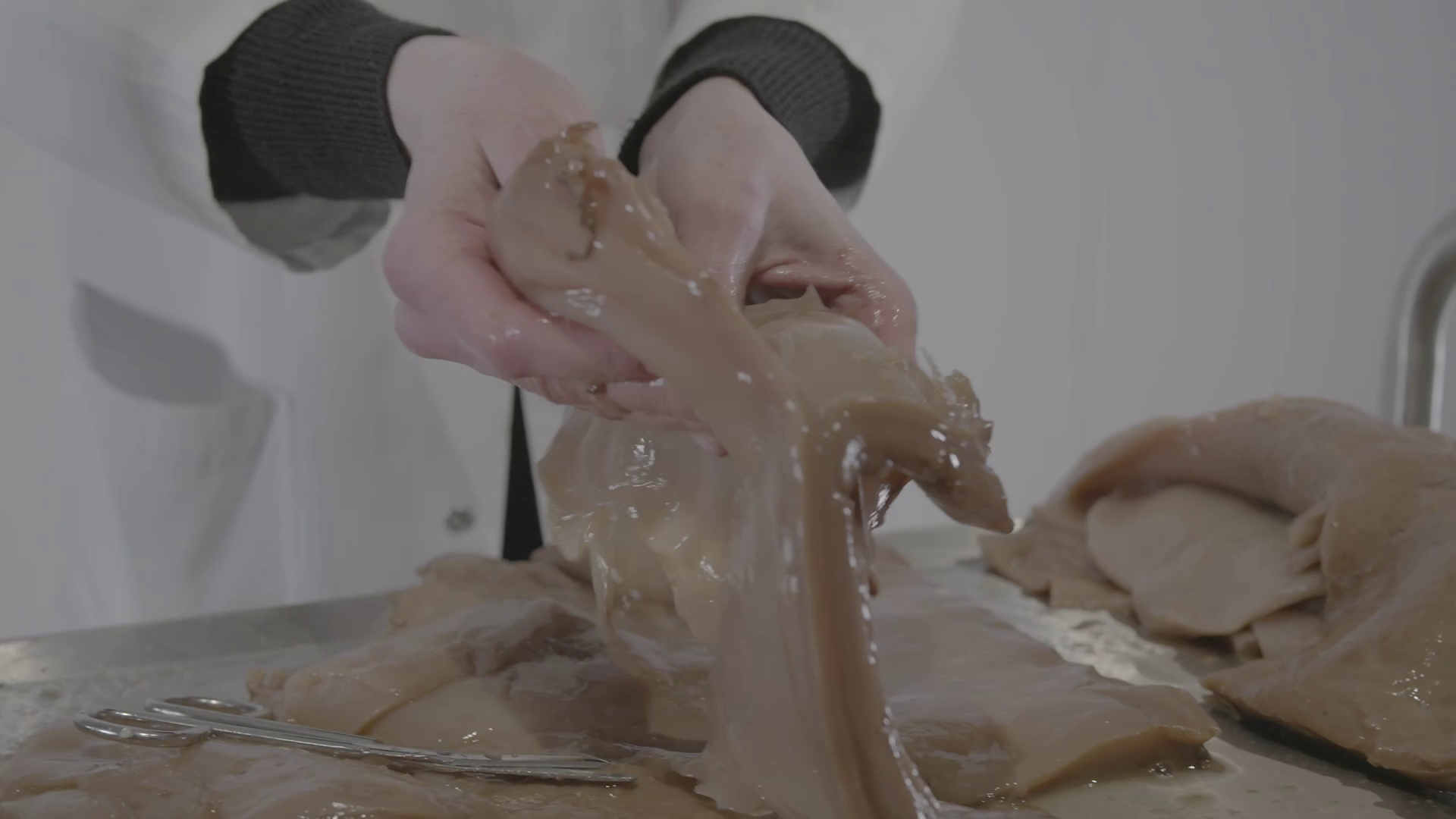
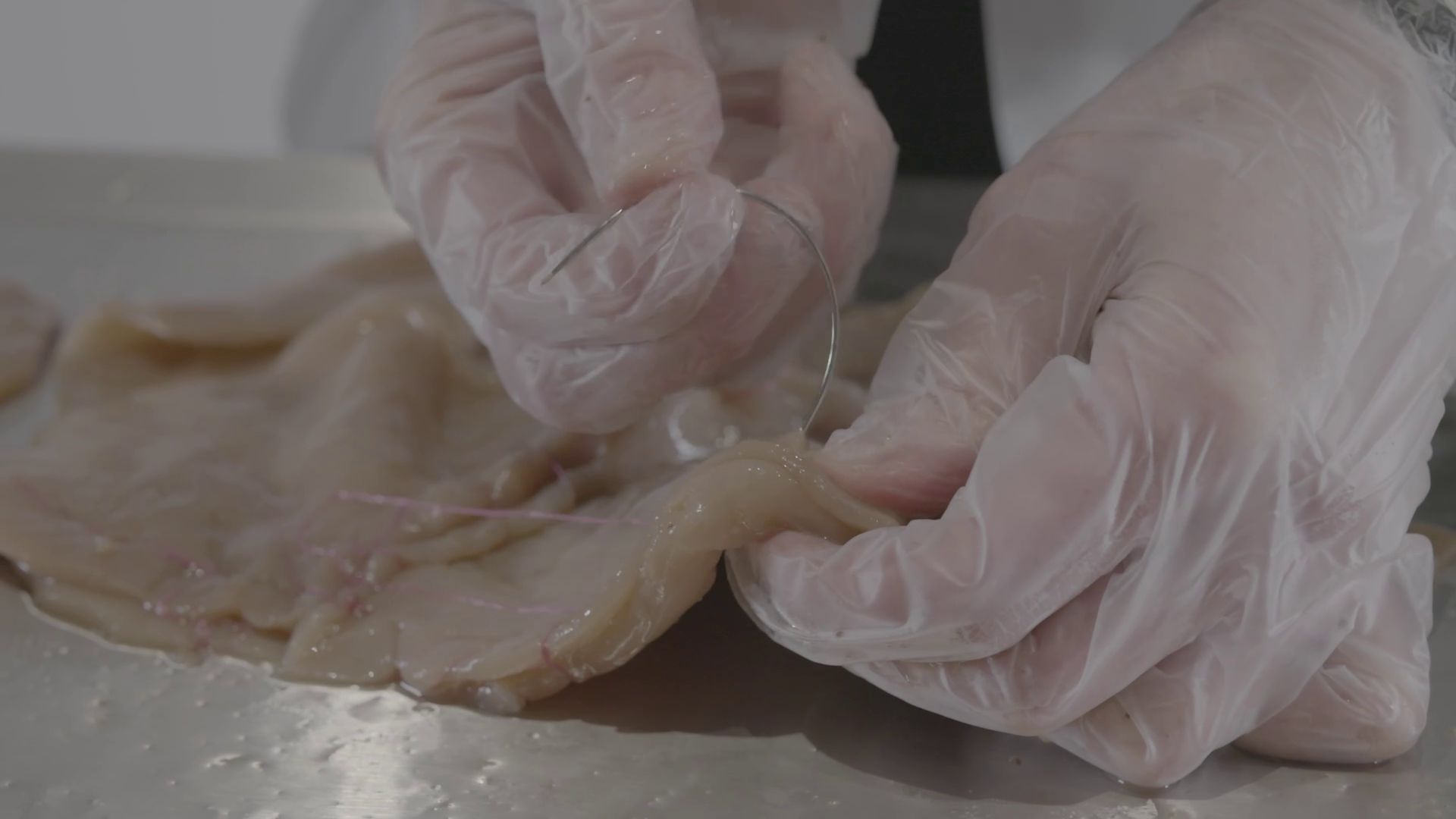
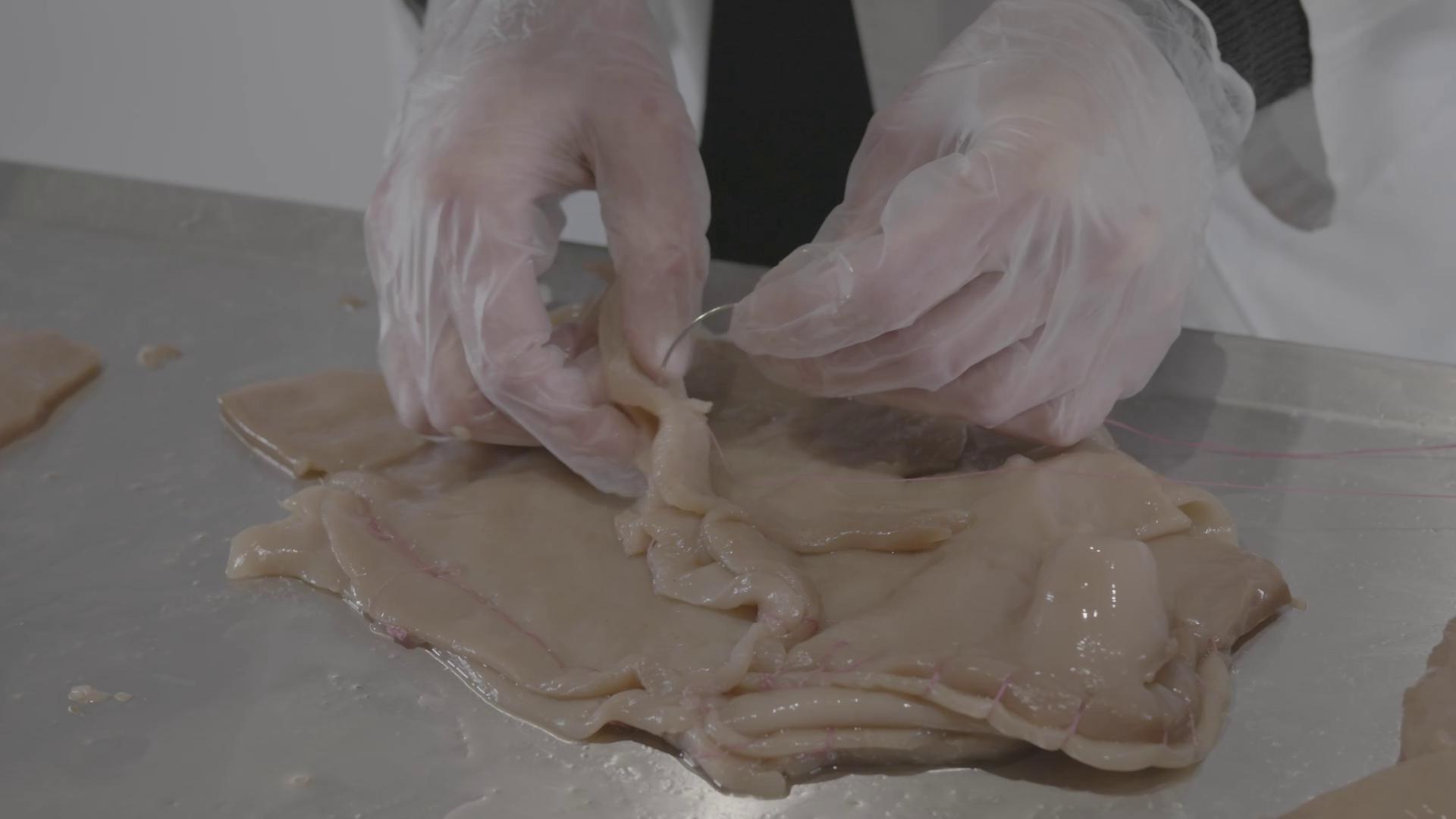
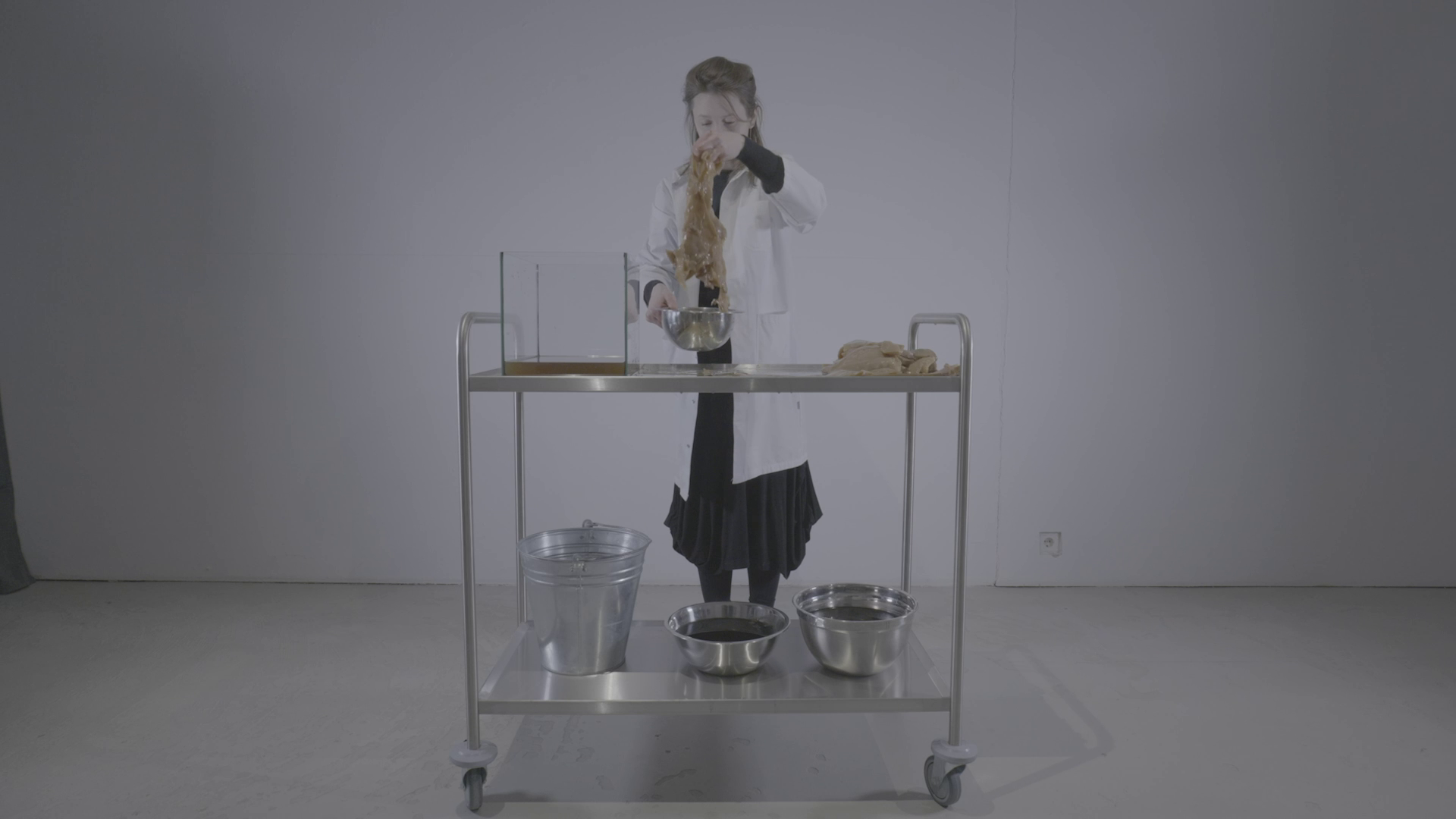
The objects in the exhibition are connected through their materiality: SCOBY, or symbiotic culture of bacteria and yeast, which forms as a result of the cooperation between lactic acid bacteria, acetic acid bacteria, and yeast. Maja, exhibited in the artist’s solo exhibition Opalescent in 2023, has returned to the exhibition space, still in an aquarium, but transformed during the performance into an unrecognizable new body made of remaining healthy tissues. This body still has some of the historical layers that it has accumulated over more than three years of existence, but these layers are now in a new relationship, raising the question of whether this relationship is possible and viable. During the exhibition, nourished by sweet black tea provided by the gallery curators, this exhibit will either grow and transform or die. Another element created from SCOBY as the main material is an amber-colored screen suspended in a wooden frame in the exhibition space. This screen was grown from the same historical SCOBY material that once provided the raw material for Maja. The matter is transformed, but it carries the heritage of dozens of sweet generations – water, tea, and sugar – between Lithuania, Estonia, Lithuania, Germany and back. It becomes an exploration of the ecology of care and gratitude, considering all the gentle, caring hands that have tended to this symbiotic culture before it turned into amber.
This exhibition is supported by Meno Parkas gallery and Lithuanian Council for Culture. My artistic research is generously supported by an individual grant from the Lithuanian Council for Culture.
My work on this exhibition was kindly supported by Nijolė and Gediminas Valevičiai (all logistics), Vaida Tamoševičiūtė (outside eye and feedback), Albinas Vološkevičius & Aregama (framing solutions). Performance which is part of the exhibition was filmed by Albinas Liutkus, edited by Akvilė Matulaitytė, photo-documented by Vaida Tamoševičiūtė.
The exhibition is taking place in contemporary art gallery Meno Parkas (Rotušės a. 27, 44279 Kaunas, Lithuania) until the 8th of March.
 Daina Dieva